
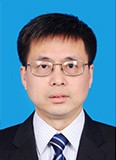
Prof. Jizhong Zhu
South China University of Technology, China
Experience: Jizhong Zhu is a Professor of South China University of Technology, and National Distinguished Expert. He is an IET Fellow, IEEE PES Smart Building, Loads, Customer Systems Technical Committee member, Chair of IEEE SBLC Load Subcommittee, Chair of IEEE SBLC Asia-Pacific Working Group, IEEE SMC Technical Committee on Intelligent Power and Energy Systems Technical Committee member. He is also an Expert of IEEE 2030.9 Standard WG on Micro-grids, Expert of International Electrotechnical Commission WGs IEC SEG6, IEC TC22 AHG1, IEC TC22 AHG2, respectively, and Chair of IEEE Standard IEEE P2781 - Load Modeling and Simulation for Power Systems. Dr. Zhu has worked at ALSTOM Grid Inc. in Washington State, Howard University in Washington, D.C., the National University of Singapore, Brunel University in England, and Chongqing University in China. He was a Senior Principal Power Systems Engineer as well as a Fellow with ALSTOM Grid Inc., and an honorable advisory professor of Chongqing University. He has published six books as an author and co-author, as well as about two hundred papers in the international journals and conferences. His research interest is in the analysis, operation, planning and control of power systems, smart grid, power markets as well as applications of renewable energy.
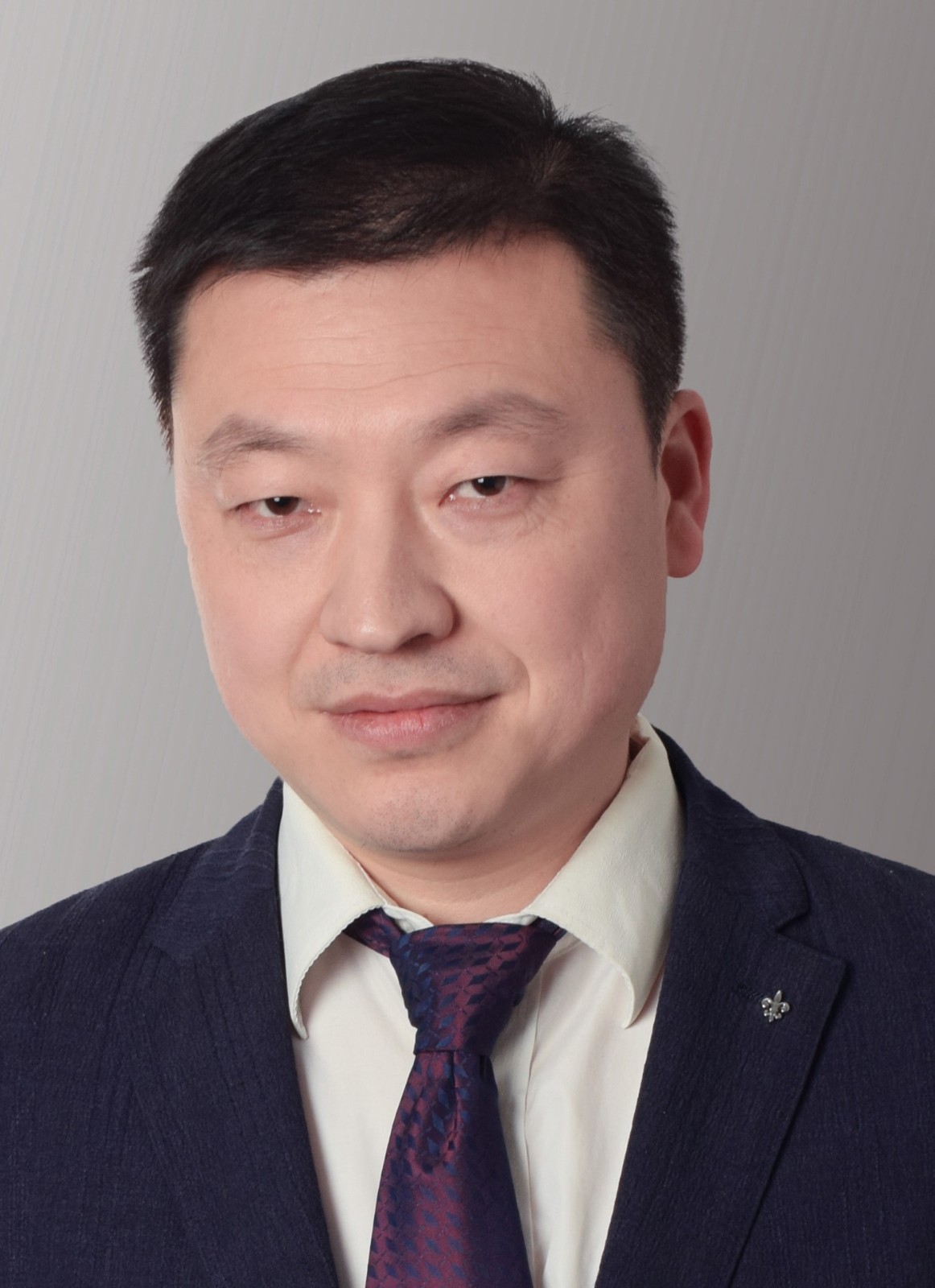
Prof. Kai Yang
Huazhong University of Science and Technology, China
Title: Research on novel hybrid flux permanent magnet motor and its control system
Abstract: Direct-driving permanent magnet machine is the key component of advanced equipment such as construction machinery, power equipment, electric vehicles and intelligent appliances. In the direct drive system, the gear box is no longer required, thus the shaft of the machine is coupled with the load directly. In this case, any torque ripples from the machine will be directly passed to the load. Therefore, for direct drive system, it is vital that the torque quality of the machine be guaranteed. To reach higher torque density and lower torque ripple, a novel axial-radial flux permanent magnet machine (ARFPMM) and its control system are proposed. T-type SMC core, axial rotor, and radial rotor are applied to support axial-radial flux path and make full use of the space. A dimensionality reduction method is proposed to transform the FEA model from 3D to 2D. The error between the proposed 2D model and the standard 3D model is less than 1%, while the calculation time is reduced.
Experience: Prof. Kai Yang, associate dean of School of Electrical and Electronic Engineering (SEEE), Huazhong University of Science and Technology (HUST). Visiting scholar at the University of Leuven in Belgium and visiting professor at the University of Changwon in Korea. In recent years, he has presided over four National Natural Science Fund projects, two major national science and technology projects, one national support plan, one 863 Project, one provincial fund, one international cooperation project, and more than 40 other school-enterprise cooperation projects. He has published more than 200 papers of the first author in the important academic journals at home and abroad, among which 170 papers are included in Sci/ei. There are 25 patents for invention and 38 patents for utility model.

Prof. Ting Yang
School of Electrical and Information Engineering, Tianjin University, China
Research Area: Energy & Power, Internet of Things, Artificial Intelligence, Intelligent Manufacturing
Research Experience: Prof. Ting Yang, doctoral supervisor, is a discipline leader in the School of Electrical and Information Engineering, Tianjin University. He is the deputy director of the national "distributed energy and micro grid" international science and technology cooperation base and the deputy director of Tianjin "Energy Internet” International Joint Research Center. As the largest contributor, he has won two provincial and departmental science and technology progress awards and some enterprise science and technology progress awards. He has published more than 100 SCI/EI papers, 4 monographs and 2 international invention patents in top academic journals in China and abroad. He has served as the session chair of several IEEE international conferences. He also served as the editor in chief or member of the Editorial Committee of several SCI journals. He is the special editor in chief of "Application of artificial intelligence in power system and energy Internet"(which won him the "Outstanding Special Editor Award" in 2018) of “Journal of Power System Automation”, and the special editor in chief of "Ubiquitous Power Internet of Things (UPIOT)" of “Journal of Power Construction”. He is now the deputy director of circuit and system branch of China Electronics Society, the national director of sensor sub committee of China Instrumentation Society and a member of the theoretical electrician special committee of China Electrical Engineering Society. His main research interests include energy & power, Internet of things, artificial intelligence and intelligent manufacturing.

Prof. Xiaohuan Li
GuilinUniversityofElectronicTechnology,China
Research Area: Wireless sensor networks, Vehicular networks, UAV networks, Cognitive radios
Research Experience:
Prof. Xiaohuan Li received the B.Eng. and M.Sc. degrees in information and communication engineering from the Guilin University of Electronic Technology, Guilin, China, in 2006 and 2009, respectively, and the Ph.D. degree from the South China University of Technology, Guangzhou, China, in 2015. From 2016 to 2019, he was a postdoctor with Beihang University, Beijing, China. He was a Visiting Scholar with the Université de Nantes, France, in 2014. He is currently a Professor with the School of Information and Communication, Guilin University of Electronic Technology and Research fellow with the National Engineering Laboratory of Application Technology of Integrated Transportation Big Data.
He has published over 50journal articles and conference papers and has published one books and two book chapters. His current research interests include wireless sensor networks, vehicular networks, UAV networks, and cognitive radios.
Title:Intelligent networks for autonomous vehicle and new application scenarios
Abstract: In this talk, we first introduce the main concepts and challenges related to intelligent networks from autonomous vehicle perspective. We mainly introduce our recent studies on intelligent networks for Internet of vehicles, Intelligent transportation system and sensor sharing. Throughout the talk, we will present some results related to edge computing, resource management & optimization and so on. We will also point out several open research questions and new application scenarios for further study.

Prof. Junzheng Jiang
GuilinUniversityofElectronicTechnology,China
Research Area: Graph Signal Processing
Research Experience:Junzheng Jiang (Member, IEEE) received the B.S. degree in applied math from the Guilin University of Electronic Technology, Guilin, China, in 2005 and the Ph.D. degree in information and communication engineering from Xidian University, Xi’an, China, in 2011. He is now with the Guilin University of Electronic Technology, where he is currently a full professor and an Advisor of a Ph.D. student. From February 2016 to February 2017, he was a visiting scholar with the University of Central Florida, Orlando, FL, USA. His research interests include graph filter bank, distributed signal processing on graphs, and time-vertex signal processing on graphs.
Title:Graph signal processing: fundamentals and distributed algorithms
Abstract:In this talk, the fundamental concepts are firstly reviewed, including the graph model, graph signal, graph Fourier transform, graph filter. Then, we will introduce our recent work on the graph filter bank which can be employed for multiresolution of graph signals. Furthermore, the distributed processing algorithms will be discussed and highlighted. This talk tries to construct a connection between the graph signal processing and classical signal processing, and presents the great potential ability of the graph signal processing framework on massive networked data.